{{brizy_dc_image_alt imageSrc=

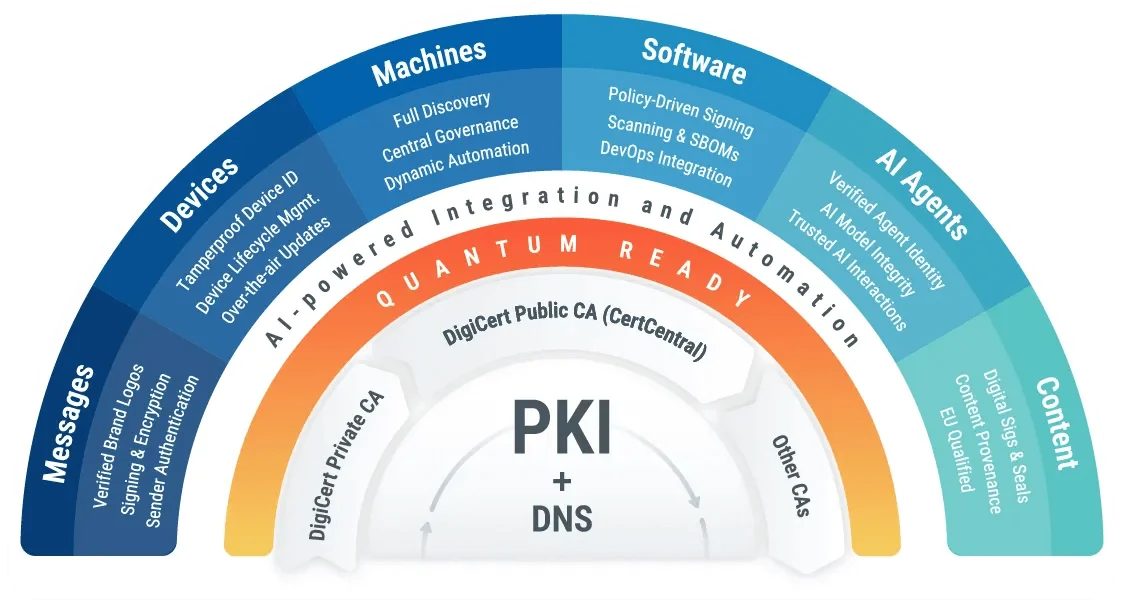
Everything You Need to Manage Digital Trust—in One Platform

Centralize PKI, certificate lifecycle management, DNS, and trust services without tool sprawl.
{{brizy_dc_image_alt imageSrc=

Certificate Lifecycle

Get full visibility across your PKI landscape and avoid outages.

{{brizy_dc_image_alt imageSrc=

Software Trust

Release secure software while lowering remediation and compliance costs.

{{brizy_dc_image_alt imageSrc=

Device Trust

Protect IoT devices with complete lifecycle security, from manufacturing to decommissioning.

{{brizy_dc_image_alt imageSrc=

Document Trust

Safeguard digital documents and transactions with trusted integrations and global compliance.

{{brizy_dc_image_alt imageSrc=


DNS >>

DigiCert Public CA (CertCentral) >>

Private CA


{{brizy_dc_image_alt imageSrc=

Why Digital Trust Fails at Enterprise Scale


  • Expired certificates cause outages
  • Manual PKI processes don’t scale
  • Compliance gaps increase security risk
  • Tool sprawl slows security teams

Trusted by the World’s Most Security-Sensitive Organizations

When downtime, compliance, and trust matter, enterprises choose DigiCert.

{{brizy_dc_image_alt imageSrc=

Of Fortune 500


Partner with the best. Get the world’s most advanced digital trust platform to power and secure all your connections.

{{brizy_dc_image_alt imageSrc=

Uptime since 1999


Everything digital stops without DNS. Choose the most resilient service that serves 20% of the world’s DNS queries.

{{brizy_dc_image_alt imageSrc=

Machine identities


PKI is everywhere. Manage all of it with one platform: machines, software, documents, IoT devices, humans, AI agents, servers, and more.
{{brizy_dc_image_alt imageSrc=

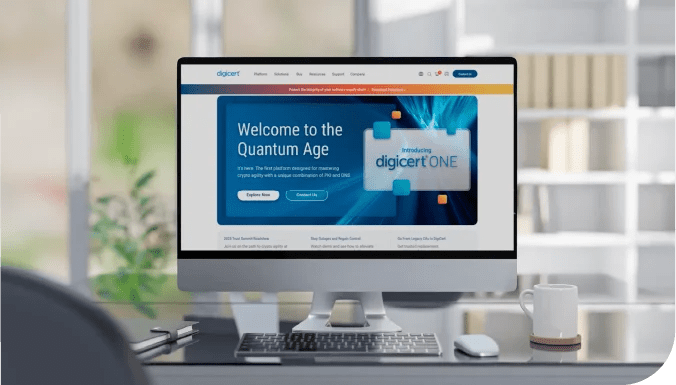
Quantum-Ready Security—Without Replacing Your Stack

Prepare for post-quantum cryptography while maintaining compatibility with today’s systems.

Built for Real Enterprise Use Cases


  • Secure hybrid cloud environments
  • Automate DevOps certificate workflows
  • Protect IoT and device identities
  • Maintain compliance across regions
{{brizy_dc_image_alt imageSrc=

What You Achieve With DigiCert

{{brizy_dc_image_alt imageSrc=

Prevent outages caused by expired certificates

Stop outages with proactive alerts on certificate expirations and automated renewals. Build for the future with quantum-ready cryptography. Scale effortlessly with a flexible cloud service.

{{brizy_dc_image_alt imageSrc=

Reduce operational risk with automation


Ensure security and compliance across your certificate landscape with centralized policies and governance. Skip the exponential costs of fixing software security flaws after it’s been released.

{{brizy_dc_image_alt imageSrc=

Accelerate compliance across global teams

Replace manual PKI and DNS management with policy-driven automation, seamless integrations, and self-service tools, ensuring agility, efficiency, and optimized resource allocation across your organization.

{{brizy_dc_image_alt imageSrc=

Scale securely without adding headcount

Build customer loyalty with a strong track record. Reduce your attack surface with code scanning for malware, vulnerabilities, and exposed secrets while automating risky manual processes.

The Total Economic Impact of DigiCert ONE


Forrester estimates a composite organization achieved 312% ROI and a Net Present Value of $10.1M with DigiCert ONE.

{{brizy_dc_image_alt imageSrc=

What our Customers Say

By integrating with DigiCert ONE,

DigiCert became the backbone of our enterprise trust strategy.
{{brizy_dc_image_alt imageSrc=

“At the end of the day, it’s about trust, and DigiCert supports our ability to ensure trust when we process our customers’ sensitive traffic.”


-Lidor Pergament, Director of Product Management, Zscaler

{{brizy_dc_image_alt imageSrc=

"Digital trust is the cornerstone to the foundation of an organization and without it organizations are vulnerable to every threat."


SEAN SWEENEY, CHIEF INFORMATION SECURITY OFFICER

{{brizy_dc_image_alt imageSrc=

Related Resources

{{brizy_dc_image_alt imageSrc=

DATASHEET


For CISOs

The platform for digital trust


{{brizy_dc_image_alt imageSrc=

EBOOK


For PKI Architects

Where You Need Trust, You Need PKI


{{brizy_dc_image_alt imageSrc=

EBOOK


For IT Operations

Post-Quantum Cryptography

TLS/SSL FAQs

Digicert FAQ

What Are TLS/SSL Certificates? +
Transport Layer Security (TLS) certificates—most commonly known as SSL, or digital certificates— are the foundation of a safe and secure internet. TLS/SSL certificates secure internet connections by encrypting data sent between your browser, the website you’re visiting, and the website server. They ensure that data is transmitted privately and without modifications, loss or theft.
Why Do Sites Need to Use TLS/SSL Certificates? +
TLS/SSL certificates are the standard by all major web browsers to ensure a safer internet experience for users. Websites secured by TLS/SSL certificates are more trusted by internet users because they encrypt and protect private information transferred to and from their website. They also represent, or certify, your website’s brand identity. In that sense, TLS/SSL certificates are both an identity protection measure for online brands, and a security measure for companies transmitting private data online.
How Do TLS/SSL Certificates Work? +
TLS/SSL certificates establish an encrypted connection between a website/server and a browser with what’s known as an “SSL handshake.” For visitors to your website, the process is invisible—and instantaneous.

Authentication: For every new session a user begins on your website, their browser and your server exchange and validate each other’s TLS/SSL certificates.

Encryption: Your server shares its public key with the browser, which the browser then uses to create and encrypt a pre-master key. This is called the key exchange.

Decryption: The server decrypts the pre-master key with its private key, establishing a secure, encrypted connection used for the duration of the session.
What Is Digital Trust? +
Digital trust is a modern combination of encryption, security and identity solutions designed to extend protection across every virtual interaction and build a bridge of trust between the digital and physical worlds. Essentially it's the unification of TLS/SSL, IoT and PKI security through a centrally managed platform.
Do TLS/SSL Certificates Work on All Devices, Systems and Versions? +
Yes DigiCert TLS/SSL certificates are issued under one of the longest-lived and most widely supported roots in the industry. DigiCert TLS/SSL certificates deliver the highest root ubiquity on 99.9% of web browsers, major operating systems and mobile devices. If you have questions about the compatibility of older devices, please contact our support team.

Browsers: Just as websites are designed to be device and browser agnostic, TLS/SSL is supported by all major web browsers.

Servers: A TLS/SSL certificate can be supported by any server. It’s up to the browser to determine the security of a server during the handshake process.

Email: Most cloud-based email providers use TLS/SSL encryption. Organizations can also install an TLS/SSL certificate to protect private email servers.
Does My Website Need a TLS/SSL Certificate? +
Yes, most websites that conduct business on the internet require a digital TLS/SSL certificate to encrypt and secure private data that is transmitted. TLS/SSL certificates protect your business’ and your customers private information. In addition, without a certificate most major browsers will display a “Not Secure” message in the address bar. Having an unsecure website could prevent customers from completing purchases or doing business with your company. If you want to signal the highest level of security and brand authenticity to customers, we recommend using an EV or OV certificate.
Why Is My Website Showing a “Not Secure” Message in the Browser Address Bar? +
Any website without a secure TLS/SSL certificate will show a “Not Secure” message in the browser address bar. The only way to fix a “Not Secure” message on your website is by installing a TLS/SSL certificate. You can do that by purchasing a certificate from DigiCert and following the installation steps in CertCentral.
How fast can DigiCert be deployed? +
DigiCert can be deployed quickly and efficiently, typically within hours. With DigiCert ONE, businesses can seamlessly manage their certificates and deploy security solutions across their environments, enabling faster time to security. The process is streamlined to help organizations minimize downtime and improve operational efficiency.
How does it compare to internal PKI? +
Unlike internal PKI, DigiCert offers a centralized solution that eliminates the complexity of managing infrastructure and hardware. DigiCert ONE simplifies certificate management and increases scalability, providing automated workflows and visibility across the organization. It’s an easier, more cost-effective solution compared to maintaining an internal PKI setup.
What happens if certificates expire? +
When certificates expire, DigiCert automatically sends reminders and enables easy renewal through the DigiCert ONE platform. Expired certificates can cause disruptions in services, but DigiCert minimizes this risk by offering automated certificate lifecycle management, ensuring businesses stay compliant and secure without manual intervention.
Is this suitable for regulated industries? +
Yes, DigiCert is fully compliant with the highest industry standards, making it suitable for regulated industries such as finance, healthcare, and government. DigiCert offers robust security features, including advanced encryption, audit trails, and support for regulatory compliance requirements, ensuring businesses remain compliant with standards like HIPAA, GDPR, and PCI DSS.

Get a personalized walkthrough. No sales pressure. Enterprise-only consultation.

Digicert - Orginal Form
{{brizy_dc_image_alt imageSrc=

The most-trusted global provider of high-assurance TLS/SSL, PKI, IoT and signing solutions.


© 2026 DigiCert, Inc. All rights reserved.